2026-06-27
Thamar University Leaders Discuss Next Phase Requirements and Institutional Development Plans with Deputy Minister
□ Thamar University Media / Muharram 12, 1448. June 27, 2026
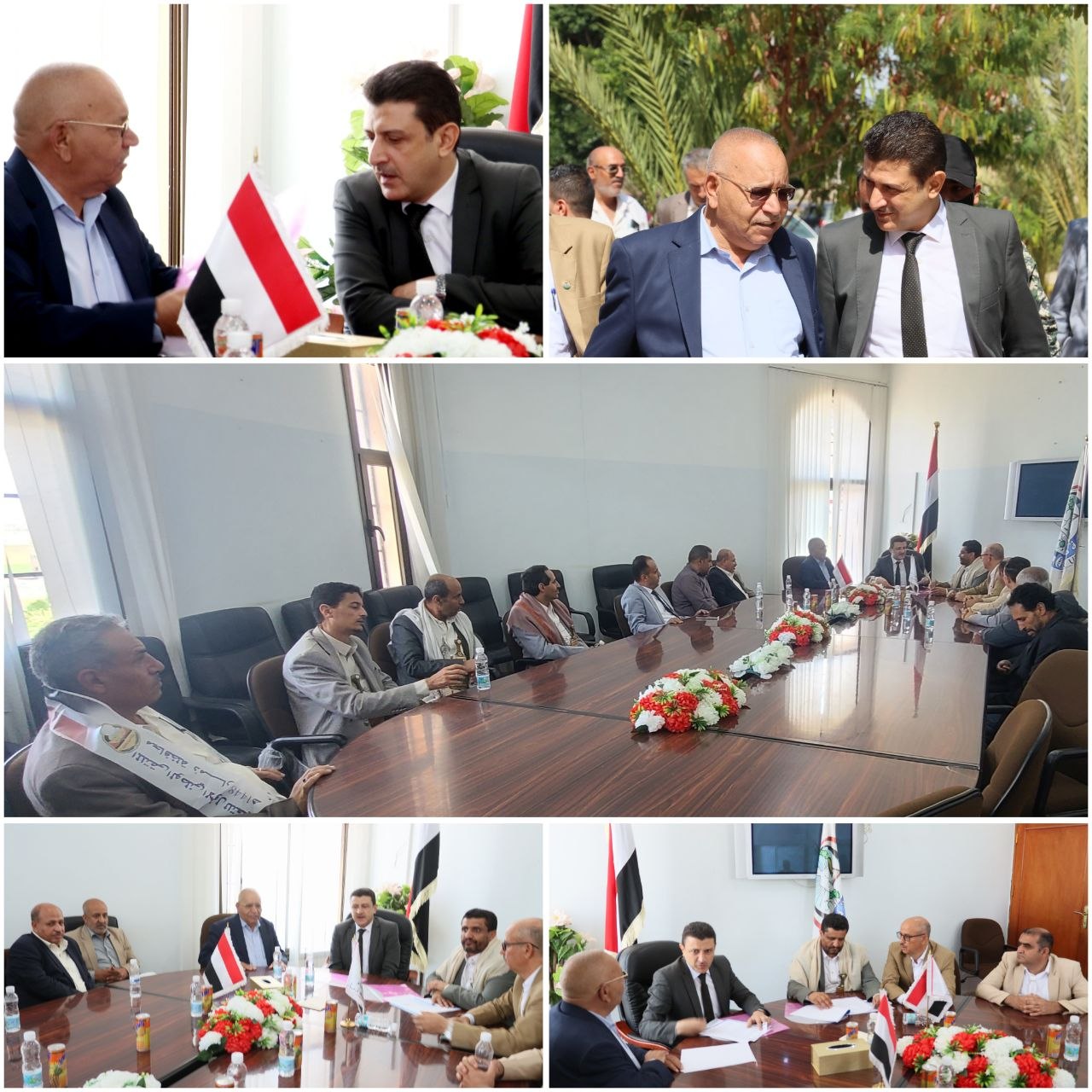
■ In the context of strengthening partnership and coordination between the Ministry of Education and Scientific Research and public universities, Professor Dr. Mohammed Mohammed Hassan Al-Haifi, the Rector of Thamar University, held an expanded meeting at the university headquarters following his meeting with Dr. Hatem Al-Duais, the Deputy Minister of Education and Scientific Research, and Hadi Ammar, the Undersecretary of the Basic Education Sector.
The meeting was dedicated to discussing a number of issues and topics related to developing academic, research, and administrative performance, supporting the university's progress, and enhancing its role in serving the community.
The meeting was attended by Professor Dr. Abdulkafi Al-Rifai, the Vice-Rector for Student Affairs, Professor Dr. Abdulkarim Zabiba, the Vice-Rector for Graduate Studies and Scientific Research, Professor Dr. Adel Abdulghani Al-Ansi, the Vice-Rector for Academic Affairs, Professor Dr. Essam Wasel, the Rector's Assistant for Centers Affairs, Dr. Mohammed Hutrum, the General Secretary General of the University, as well as a number of deans, general directors, and academic and administrative leaders of the university.
At the beginning of the meeting, the University Rector welcomed the Deputy Minister and his accompanying delegation, expressing his appreciation for this visit, which reflects the Ministry's leadership's interest in monitoring the conditions of public universities and understanding their needs and future aspirations. He affirmed that Thamar University continues its efforts to develop its academic and research programs and expand the scope of its educational and community services, despite the existing challenges and difficulties.
During the meeting, a number of topics related to developing the educational process, enhancing the quality of academic programs, and improving the university's study and scientific research system were reviewed. The meeting also discussed the needs related to infrastructure, educational and technological equipment, and ways to provide a university environment conducive to creativity and excellence.
The attendees also discussed several issues related to expanding the university's role in community service and strengthening partnerships with official and community institutions. This aims to leverage the university's scientific and academic capabilities to support local development efforts and meet community needs.
During the meeting, Dr. Hatem Al-Duais emphasized the Ministry's commitment to supporting public universities and empowering them to fulfill their educational, scientific, and national mission. He commended the advanced level of performance, organization, and academic activity he observed at Thamar University, as well as its ongoing efforts in development and modernization.
The Deputy Minister noted that Thamar University is one of the leading academic institutions, possessing promising potential that qualifies it to continue its excellence and play an active role in developing national talent and serving the community. He stressed the importance of continued institutional work and strategic planning to address challenges and achieve further accomplishments.
From their part, the University's Vice-Rectors and several academic and administrative leaders reviewed the most significant achievements of the past period, in addition to outlining a number of needs and requirements that would enhance academic and research performance and improve university services provided to students and researchers.
At the conclusion of the meeting, participants emphasized the importance of continued coordination and cooperation between the Ministry and the University, and working to overcome the difficulties facing the educational and research process.
This will contribute to strengthening the position of Thamar University and consolidating its role as a leading academic and scientific institution that effectively contributes to human development, community service, and achieving national development goals.